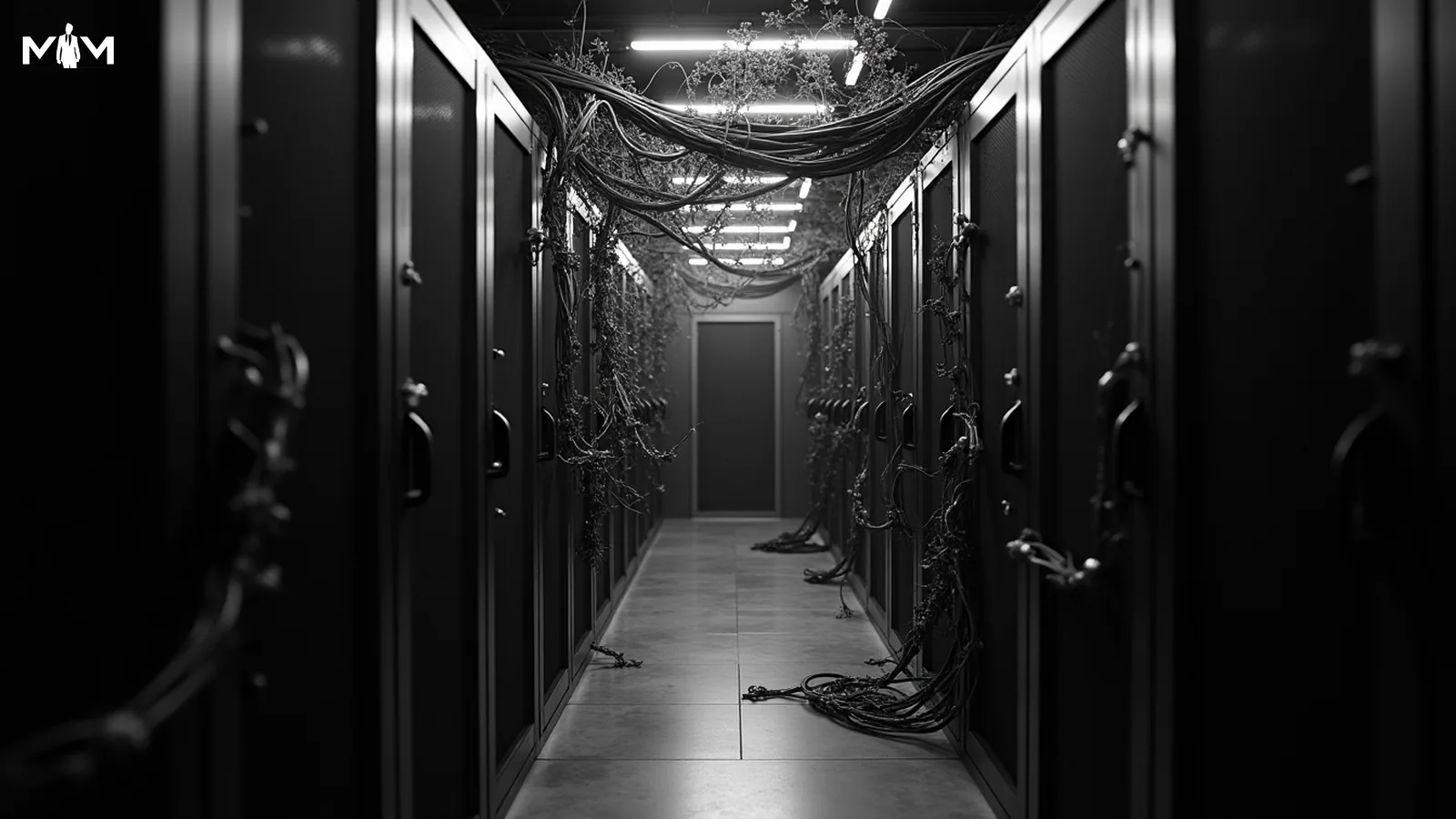
The most dangerous moment in a product build isn't when you're broke and can't ship. It's when everything suddenly feels cheap to ship. That's the moment founders start saying yes to everything, and it's the moment the real costs start piling up.
The Illusion of Cheap
AI coding tools made output fast. Genuinely fast. A senior engineer who used to spend three days on a feature can rough it out in an afternoon. That's real, and we're not going to pretend otherwise. But GitHub's engineering team put it plainly: the cost of writing code dropped, but the cost of owning that code did not. Every feature you ship is a hostage you're holding forever. It needs to be maintained, tested, documented, debugged, and eventually buried or replaced. Speed on the front end doesn't shrink any of that.
We've watched this pattern across hundreds of engagements. The founder gets excited because the friction dropped. The backlog clears. New features fly out the door. Then six months later they're drowning in a product that does forty things adequately and nothing exceptionally, the codebase is a maze, and the engineering team is spending eighty percent of their time managing what already exists instead of building what's next.
Focus Is the Constraint That Doesn't Move
This isn't just an engineering problem. Seth Godin pointed at OpenAI as a case study in what happens when resources are nearly unlimited and focus is optional. They built a chat interface, then image generation, then a basketball, then a meme video generator they quietly cancelled, and now a speaker that wanders around your house. Some of those are probably good products. But none of them are the thing. When the cost of starting something drops to near zero, the discipline of not starting things becomes the actual competitive advantage.
You don't have OpenAI's budget. You have a team, a runway, and customers who need something specific done well. That context makes the focus question even more urgent. Every yes you say to a new feature or a new direction is a no you're saying to depth, reliability, and the kind of ownership that makes a product feel finished instead of assembled.
The Reasoning Looks Sound Until It Doesn't
Here's what makes this hard. The logic for each individual yes usually holds. The feature makes sense in isolation. The new product line looks adjacent. The pivot has a reasonable thesis. What breaks isn't any single decision, it's the accumulation of decisions made without a real accountability structure for what gets carried forward.
Researchers studying AI chain-of-thought reasoning found something that maps cleanly here. A paper on LLM reasoning audits showed that models can produce conclusions that appear logically grounded even when those conclusions don't actually depend on the premises stated. The reasoning looks connected. It reads as coherent. But swap out a core input and the output barely changes, which tells you the logic was decorative, not load-bearing. Product roadmaps work the same way. The justification for a feature can sound airtight while quietly having nothing to do with the actual business case. The reasoning is there for comfort, not for rigor.
We've sat in rooms where a founder walks through why they're adding a third product line, and every sentence sounds reasonable, and by the end we still can't find the through-line to "this is what our best customers need most." The logic was real. The premise dependency wasn't.
Conviction Under Pressure Is a Skill
There's a research thread in AI evaluation that we find genuinely useful as a business metaphor. A study on vision-language models tested what happens when users repeatedly challenge, question, or contradict a model's correct answer. Not with better evidence. Just with pressure. Persistent pushback. "Are you sure?" asked ten times in a row. A lot of models fold. They abandon correct positions not because they're wrong but because the social pressure of repeated challenge is hard to hold against.
You know this feeling. A customer pushes for a feature that will take three weeks and serve one use case. A sales prospect says they'll sign if you add a whole module you never planned to build. An investor asks why you're not doing the thing your competitor is doing. The correct answer in most of these cases is no. The hard part isn't knowing the answer. It's holding it when someone who matters keeps asking again.
The teams that stay focused aren't the ones who never feel that pressure. They're the ones who built a decision framework they trust more than the pressure in the room. That framework usually comes down to one question: if we build this, who owns it forever, and is that trade worth it?
The Benchmark Problem (and Yours)
There's a subtler issue underneath all of this. How do you even measure whether a decision was right? A LessWrong piece on AI benchmarking wrestled with the fact that many high-stakes conceptual tasks are too subjective to measure well, which means the benchmarks people use are often proxies for the real thing, not the real thing itself. The same trap shows up in product decisions. Founders measure features by tickets closed, by demos that went well, by the one customer who asked loudly. None of those are wrong metrics. But none of them capture the actual cost of carrying the thing forward for three years.
The right benchmark for a yes decision isn't "does this make sense right now." It's "would we make this same call if we had to hire a dedicated person to maintain, document, and improve this thing indefinitely." That question kills a lot of features that sounded great in a roadmap meeting.
What to Actually Do
We're not saying stop building. We're saying the ratio changed. When creation was slow and expensive, the friction was the filter. If something survived the cost of building it, it had usually been thought through. That filter is gone now. You have to install a deliberate one in its place.
Three things we tell every client at the start of a build cycle. First, separate the cost to create from the cost to own. They are not the same number and treating them as the same number is where most roadmap sprawl starts. Second, when you feel pressure to add something, find the specific customer problem it solves and name the customer. If you can't name one, you're building for a hypothetical. Third, every quarter, count the things you maintain. Not the things you're building, the things you already built that are still running. That number should not grow faster than your team.
The cheapest thing you can build right now is still the most expensive thing if nobody has the budget to own it next year. Saying no when it feels costless to say yes is the hardest discipline in software. It's also the one that separates teams that compound from teams that collapse under their own output.
The tools got faster. The judgment still has to be yours.