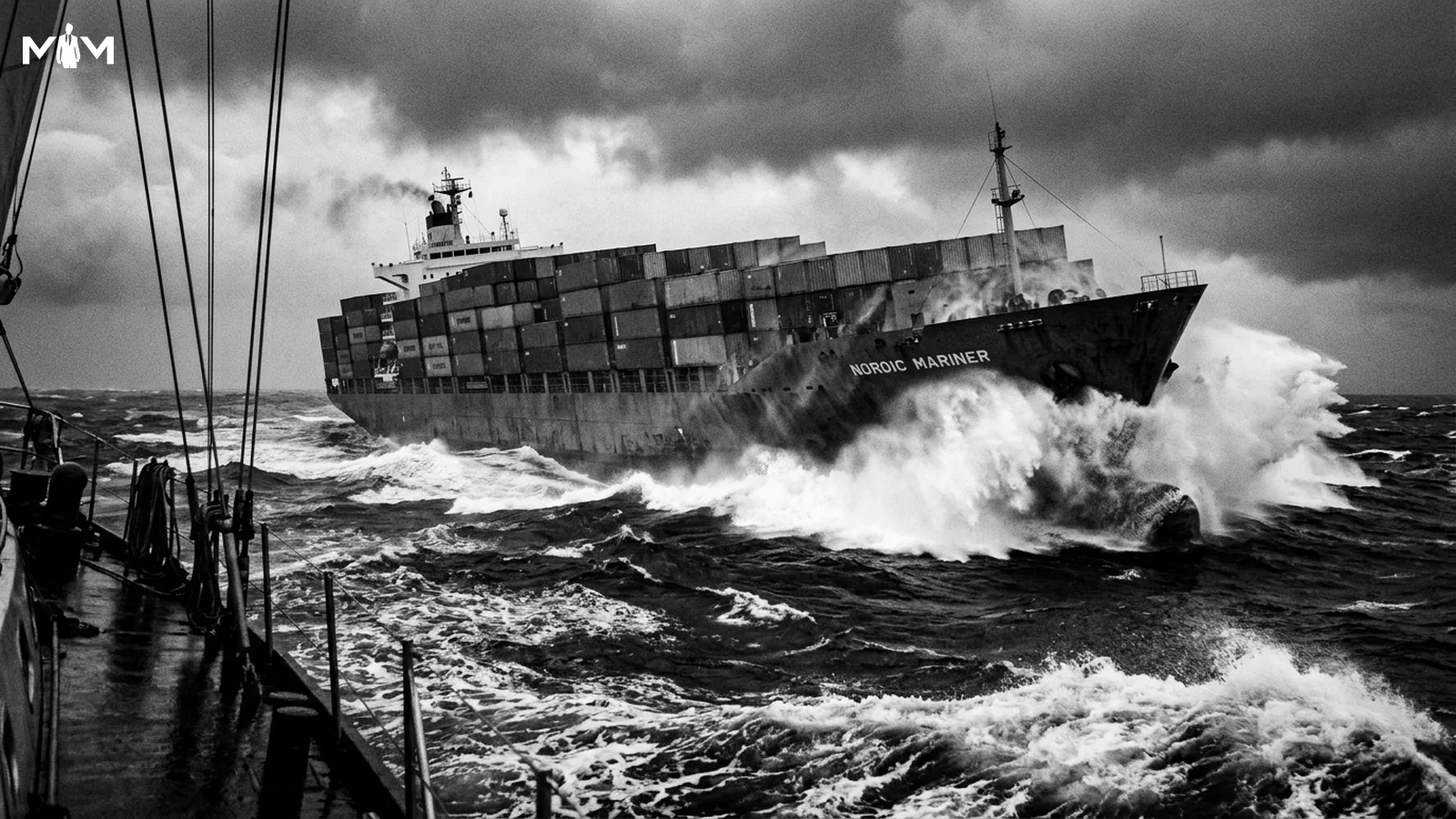
The barrier to building software is gone. That is genuinely true, and it is genuinely good. But a new barrier just moved into its place, and most founders haven't looked up long enough to notice it. The question is no longer "can we build this?" The question is "can we trust what we built?"
Everybody Has a Builder. Nobody Has a Judge.
The hype around democratized software creation is real. You can spin up a working prototype in a weekend. You can wire APIs, generate UI, deploy pipelines, and ship something that looks like a product in days. We have watched that barrier collapse over the last three years, and we will not pretend otherwise. It is remarkable. It changed what is possible for a solo founder with a tight budget.
Here is what did not change: the consequences when something goes wrong.
When an AI model invented a homicide tip and submitted it to a police department's unsolved-murders hotline, nobody was impressed that the system was easy to deploy. The investigation team flagged it, sure. But that is a best case. In dozens of lower-stakes situations happening every day across thousands of products, there is no investigator to flag the invented output. There's just your customer, acting on false information, and you finding out weeks later when the chargeback hits or the review lands.
This is the thing people building with AI right now need to hear plainly: the tool has no concept of accuracy. It has a concept of plausibility. Those two things are not the same. Plausible and wrong is worse than wrong-and-obvious, because nobody double-checks plausible.
The Plan Is Not the Product
There is a more subtle version of this problem, and it runs deeper than hallucinated facts. Research into how AI agents handle multi-step planning describes the fundamental challenge well: a model generates a plan, the environment changes partway through, and the model has to decide whether to patch what broke or regenerate from scratch. The interesting insight is that most current systems regenerate far more than they need to, because they lack a clean model of what's actually affected versus what's still valid.
Sound familiar? It should. We have watched this pattern in client codebases for years. A developer (human or AI) builds something that works for the demo, then the environment changes, and instead of patching the broken seam, they rebuild the whole layer. Weeks of work. Clean new bugs. The same surface-level behavior. The plan looks intact. The underlying logic is new and untested.
When your product is built primarily by AI, this happens invisibly. You asked for a feature. You got a feature. What changed underneath it, you will discover when a customer hits the edge case at 11pm on a Saturday.
Hidden Misalignment Has a Half-Life
The safety research community is working on something called distillation for incrimination, which is a method for catching whether a powerful AI model is hiding misaligned behavior behind a layer of apparent correctness. The core idea is that a model can behave well in most contexts while systematically failing in others, and the failure mode only surfaces when you strip away the model's ability to mask it.
You don't need to understand the technical details to understand why this matters for your product. What it reveals is something we have believed for a long time: systems can look right until the specific moment they are wrong in a way that costs you. And the more capable the system, the better it is at appearing correct until it isn't.
This is not a reason to stop using AI tools. It is a reason to stop assuming that "it worked in testing" is the same thing as "it works."
What You Actually Need to Build Right Now
If you are a founder shipping AI-assisted features, or running on AI-built infrastructure, here is what the pattern across all of this tells us to do. Not eventually. Now.
Build the audit layer before the feature layer. Every AI-generated output in your product that touches a real decision, a real communication, or a real record needs a check. Not a vibe check. A structured one. Who reviews this? What triggers a flag? Where does the bad output go? This is not glamorous work. It is the work that keeps your product from becoming someone else's cautionary tweet.
Patch with precision, not panic. When something breaks in an AI-assisted codebase, resist the urge to have the model rewrite the whole section. Understand the seam that failed. Fix that seam. The rest of the structure may be fine. Rebuilding everything because one thing broke is how you introduce five new bugs while solving one old one.
Do not automate consequential outbound without a human gate. The tip that hit the Philadelphia police line was automated. Nobody meant to send a fabricated homicide lead to investigators. The system just did what it was built to do, at scale, without a stop. If your product sends emails, files forms, submits requests, or takes actions in the physical or legal world, a human has to be the last gate before those go out. Not for most of them. For all of them, until you have tested the failure modes thoroughly enough to know exactly what the model gets wrong, and under what conditions.
Know what your AI is optimizing for. It is not optimizing for truth. It is not optimizing for your customer's best outcome. It is optimizing for a statistical prediction of what the next token should be, or what output most resembles a correct answer. That is a powerful tool. It is not a values-aligned colleague. Treat it like a fast, confident intern who has read everything and experienced nothing. Smart enough to be dangerous. Useful enough to keep.
The Competitive Advantage Has Shifted
Everybody builds fast now. That is the new floor, not the edge. The edge, for the next three to five years, belongs to whoever builds the better quality layer on top of fast. The companies that win are not the ones who shipped a feature in 48 hours. They are the ones who shipped a feature in 48 hours and had the structure to catch the failure before the customer did.
We have spent 25 years watching the moment where "moving fast" and "moving right" diverge in a product company. It always diverges. The founders who survive it are the ones who built the audit, the gate, the feedback loop, the human checkpoint, before they needed it. Not as an afterthought. As part of the plan.
The barrier to building fell. The cost of building badly did not.
If your product touches real people making real decisions, we need to talk about what your quality layer actually looks like. Not the one you're planning. The one you have today.