Every wave of new technology runs the same con. Someone builds something remarkable. Someone else captures the value. The builder gets a footnote. Or less.
We've been watching this play out across five very different stories this week, and the thread running through all of them is the same one that runs through every client engagement we've taken on for 25 years: who actually owns what gets built?
Start with Tetris. The full history of that game is a masterclass in value extraction by people who did none of the creating. Alexey Pajitnov built the thing inside a Soviet research institute in 1984. The result? Offshore millions flowed to licensors, publishers and middlemen while Pajitnov spent years without a kopek of royalties from one of the most-played games in human history. The collaborators who shaped the work got erased from the narrative. The lawyers and rights-holders got rich. Sound familiar? It should. We see a version of this every time a founder hands over equity, IP or platform dependency without understanding what they're giving away.
Now look at what's happening in the AI moment right now. The cultural critique is landing hard: the people at the top of the AI stack are making enormous bets with technology they don't fully control, while the downstream recklessness lands on everyone else. The founders writing the code. The businesses integrating the APIs. The users trusting the outputs. The liability stays diffuse. The upside concentrates. That's the same structure Tetris ran, just with a much faster clock speed.
Seth Godin put it plainly when he dug into the opportunity for bootstrapped founders building with AI: most first-wave AI success stories are about cutting costs, not creating durable value. The second wave, the one worth building in, is about finding the places where AI makes it possible to create something that actually matters to a real human and charging for it directly. Not a feature inside someone else's platform. A business. Owned by you. With customers who pay you.
That distinction matters more than it sounds. We've watched founders spend a year building a sophisticated workflow on top of a single AI provider's API, only to have the pricing change, the model deprecated or the terms shift in ways that make their business model no longer work. That's the Tetris problem in real time. You built it. They own the chokepoint. You're the collaborator who got erased.
The open-source counterculture knows this. The reason something like Penguin Mail, an open-source Rust email client built for Linux and now wiring in AI, actually matters isn't the feature set. It's the posture. Building on open foundations, owning the stack, refusing to be a tenant in someone else's infrastructure. That's a design decision before it's a technical one. It's a statement about who holds the keys.
And here's the psychology piece that ties this together: the reason founders don't make these ownership decisions clearly at the start is the same reason people let debt spiral before dealing with it. Debt is as much an emotional challenge as a financial one, and the same avoidance mechanisms that make people stop opening their credit card statements make founders stop reading their API terms of service. The short-term relief of "this just works" beats the long-term cost of "We don't control this." Until it doesn't.
We see this in practice constantly. A founder builds a membership platform on top of a third-party subscription tool. Eighteen months in, the tool raises prices, changes the terms or gets acquired. The founder has no real relationship with their own customers, no portable data, no leverage. They are a subtenant in someone else's building. The IP they thought they owned is actually a license to rent access to their own users.
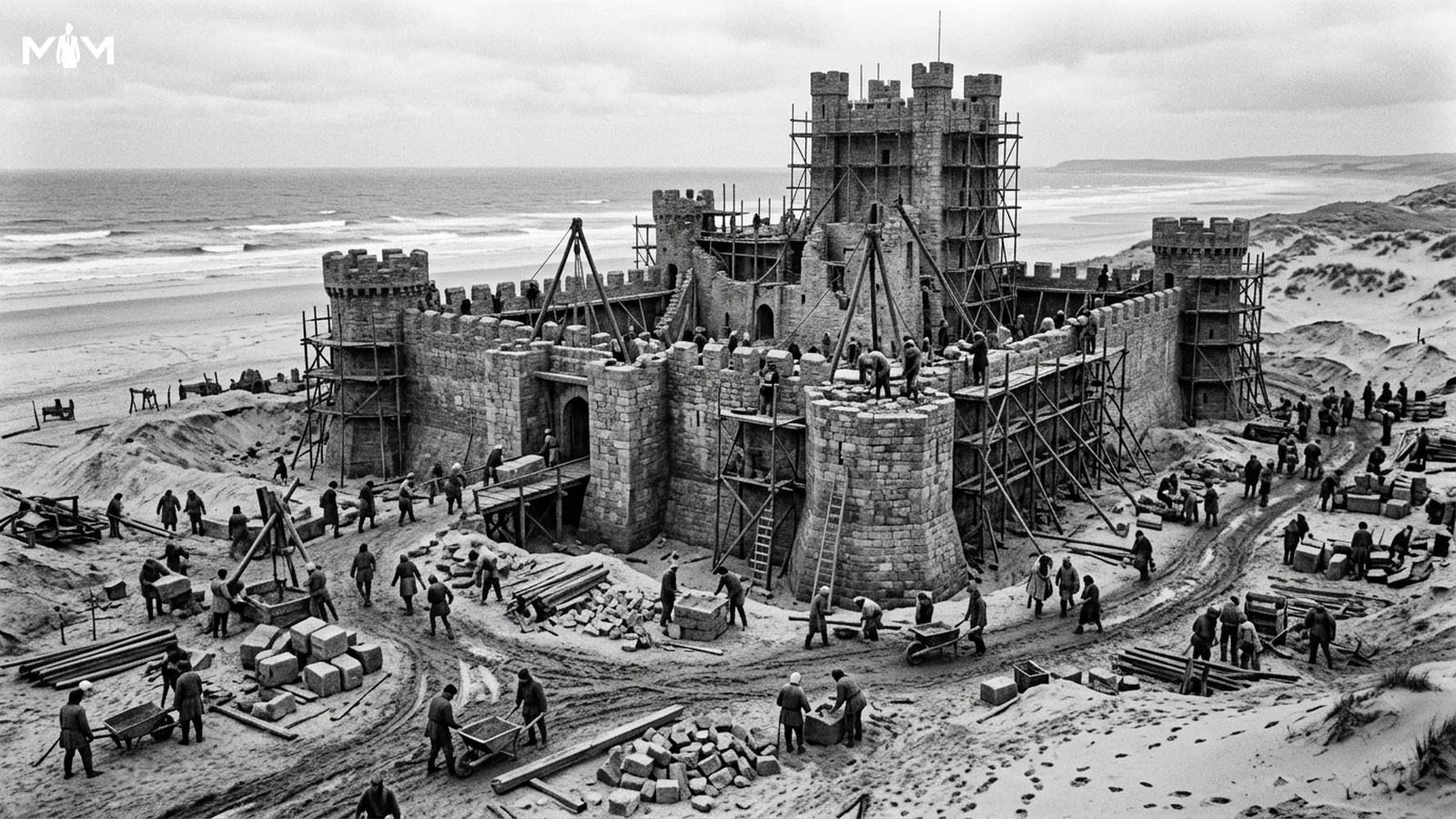
The builders who actually win in the second wave of AI aren't the ones who find the cleverest prompt. They're the ones who understand the ownership architecture of what they're building before they write the first line of code. What data do you own? What relationships are yours? If the underlying model, API or platform disappears tomorrow, what do you have left?
These are not abstract questions. They're the difference between Pajitnov and the licensors. Between a real business and a feature inside someone else's roadmap.
What to actually do about this
When we work with founders on a new AI-adjacent product, we push them through three questions before anything else gets specced or scoped.
- If the API you're building on doubles in price tomorrow, does your unit economics still work? If the answer is no, you're renting, not owning. Either your margin needs to expand or your dependency needs to shrink.
- Who owns the customer relationship? Not who processes the payment. Who holds the direct line of communication, the data, the trust. If a platform intermediary went away, could you still reach your customers? If no, you don't have a business, you have a channel strategy.
- What is defensible about what you're building, specifically? Not "AI makes it better." What, specifically, would take a well-funded competitor 18 months to replicate? If the answer is nothing, you're building on sand.
None of this is new wisdom. Pajitnov's situation in the 1980s is just more dramatic because it involved Cold War politics and offshore accounts. The underlying dynamic, builder gets the work, someone else gets the moat, plays out every day in quieter ways across every vertical we work in.
The second wave of AI is a genuine opportunity for bootstrapped, independent founders to build real businesses with durable value. But only if you build it like you own it. The tools are more powerful than anything that existed five years ago. The risk of getting the ownership architecture wrong is equally higher, because the speed at which you can build dependency into a product has also accelerated dramatically.
Build fast. But build it like you're not planning to hand the keys to anyone.