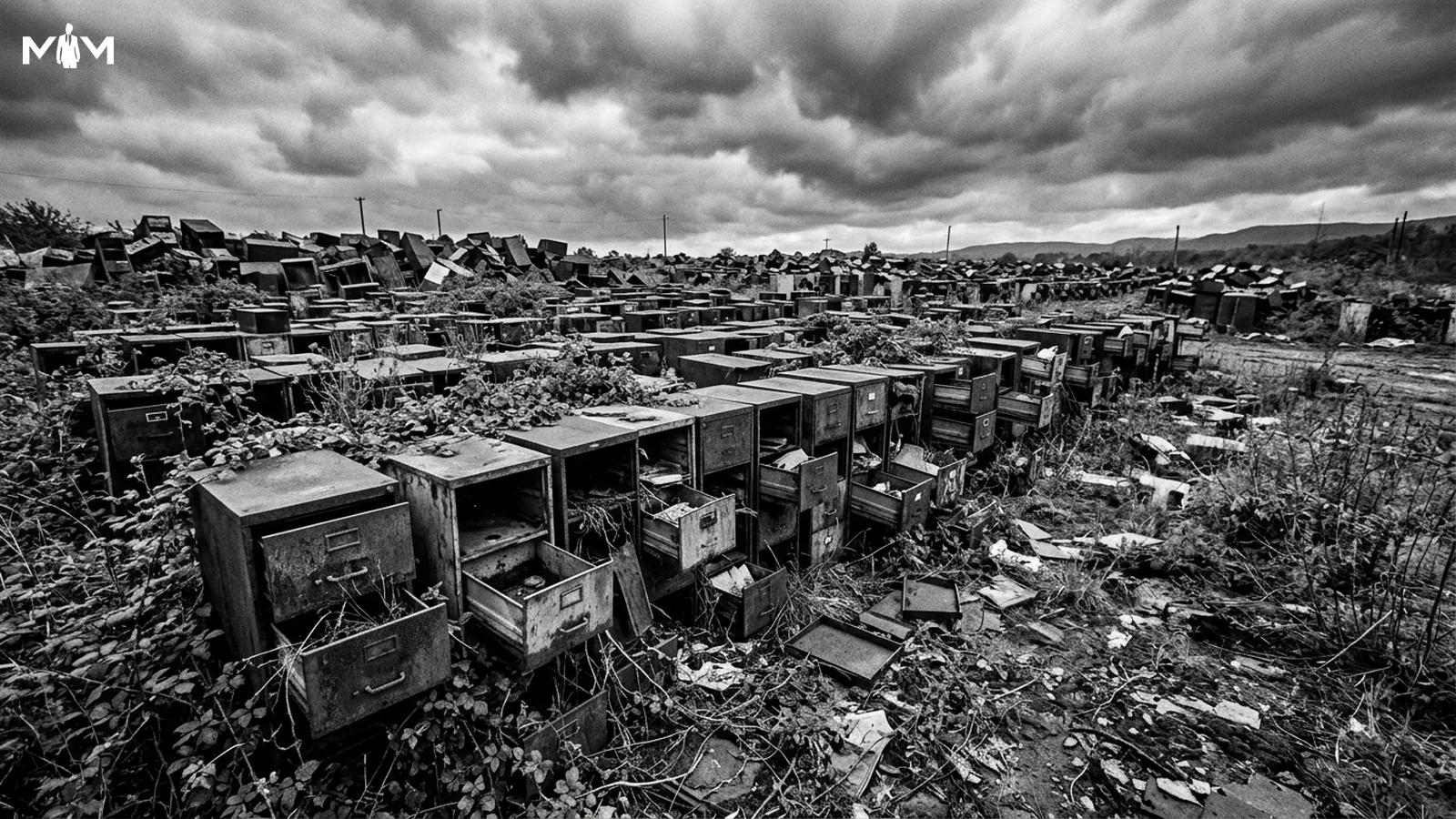
Every business we have ever worked with has a backlog. Not just a product backlog. A life backlog. A list of things that everyone agrees need to happen, that keep getting pushed to next quarter, next year, "when we have the bandwidth." Migration to a new framework. Cleanup on the solar install permitting process. Getting the catalog digitized. That one automation that would save three hours a week. The things that are clearly right, clearly needed, and clearly not happening.
Here is what we have learned: that backlog is not a capacity problem. It is a cost-perception problem. And right now, in almost every sector we touch, that perception is being revised downward so fast that businesses which don't notice are going to watch their slower competitors suddenly move in ways that looked impossible twelve months ago.
What a two-week migration tells you
Asana completed a migration off a legacy testing framework that, by all accounts, would have sat untouched for years under normal conditions. With AI-assisted tooling, the work was done in two weeks. Airbnb and Uber have similar stories. The migration category, long treated as one of the most expensive and disruptive classes of engineering work, is being repriced dramatically.
We want you to sit with that for a second. Not because you run an engineering team, but because of what it implies structurally. The reason most migrations get deferred is not that they are technically impossible. It is that the human-hours required made them economically irrational. When that equation flips, suddenly the thing you have been avoiding for three years costs less than two weeks of distraction. That is not an engineering story. That is a business strategy story.
The same repricing is happening in contexts that have nothing to do with code.
Bureaucratic drag is also a backlog
California's legislature just passed a bill enabling remote inspections for residential solar installations, awaiting the governor's signature. On the surface this is a permitting story. But what it actually is: a signal that the inspection bottleneck, the one that has delayed solar jobs, frustrated homeowners, and bloated contractor schedules for years, is being repriced. An in-person inspector who took three days to schedule becomes a video call that can happen the same week. The cost of compliance drops. The queue drains.
If you are a solar installer, an off-grid systems shop, or anyone in the alternative energy space who has eaten those delays as a cost of doing business, the ground just shifted under your feet. What you could not scale before because of inspection scheduling becomes scalable. But only if you move. Only if you rebuild the process now that the constraint is lifting.
Staying lean is a different kind of choice
Beggars Group, the independent music conglomerate behind XL Recordings, just posted $177 million in revenue and paid out a $23 million dividend from XL alone, releasing only six new albums that year. 82% of XL's revenue came from outside the UK. These numbers are not from a major label with hundreds of staff. They are from a label that made a deliberate choice to stay small, stay selective, and let catalog do the work.
Beggars did not defer building a sustainable business while chasing market share. They chose depth over breadth, kept overhead low, and let the math work over time. The backlog they avoided was the pressure to grow headcount just because revenue was growing. That discipline is hard. It runs counter to every instinct that says "more revenue means we need more people." But the payoff is that when the dividend hits, there is no army of bloated middle management eating it first.
And then there is Headspace
The acquisition of Headspace for up to $300 million is worth thinking about, not as a wellness story, but as a cautionary one. Headspace merged with Ginger back in 2021, launched Spotify partnerships, appointed celebrity brand ambassadors, and tried to be everywhere at once. What it did not do was solve its fundamental unit economics before spending like a major. The result is an acquisition at a price that, relative to its peak ambitions and funding, tells a story of deferred decisions catching up.
Headspace deferred the hard question: what does this business actually need to survive, versus what does it need to look impressive? That is the backlog that kills companies. Not the feature backlog. The clarity backlog.
The counterculture figured this out in the 1970s
There is a book making the rounds about California's back-to-the-land architecture movement, documenting communes and homesteads built with minimal resources and maximum intention. These were not rich people. They were people who decided to build what they needed now, with what they had, rather than waiting for the conditions that would never come.
We are not suggesting you go build a yurt. We are saying that the philosophical DNA of that movement, start with what you have, eliminate what you don't need, build with intention rather than inertia, is exactly what separates the founders who clear their backlogs from the ones who manage them forever.
The pattern across all of it
What connects a testing migration, a solar inspection bill, a lean music label, a wellness acquisition, and 1970s commune architecture? The cost of the deferred thing just changed. Either it got cheaper to do (AI migrations, remote inspections), or someone proved it was never worth deferring in the first place (Beggars), or someone proved that deferring the hard question is fatal (Headspace), or someone from half a century ago demonstrated that waiting for perfect conditions is just another way to never start (the land movement).
Your backlog is not a list of future work. It is a graveyard of cost assumptions you made years ago and never revisited. The migration you decided was too expensive in 2021 may cost a tenth of that today. The process you designed around a constraint that no longer exists is costing you margin every week. The question you are not asking yourself, because it feels too disruptive, is the one eating your ceiling.
What to do with this
Pull the backlog. Not the product backlog. The real one. The things that have been "on hold" for more than twelve months. For each item, ask one question: what assumption made this too expensive or too hard, and is that assumption still true?
If you have technical debt that you have been deferring because migrations feel like a multi-quarter project, we should talk. If your operational processes were designed around constraints that have since been lifted (permitting timelines, manual workflows, pricing that assumed high human-hours), we can help you find out. If you are running a lean shop in music, health, energy, or agriculture and you are wondering whether the things you couldn't afford last year are now within reach, the answer is probably yes.
The backlog doesn't shrink by itself. But the cost assumptions that built it? Those expire whether you check them or not.