Every system you depend on is being redesigned by someone who doesn't have your interests in mind. That's not paranoia. That's just the news, if you read it sideways.
The Grid Is Not Neutral
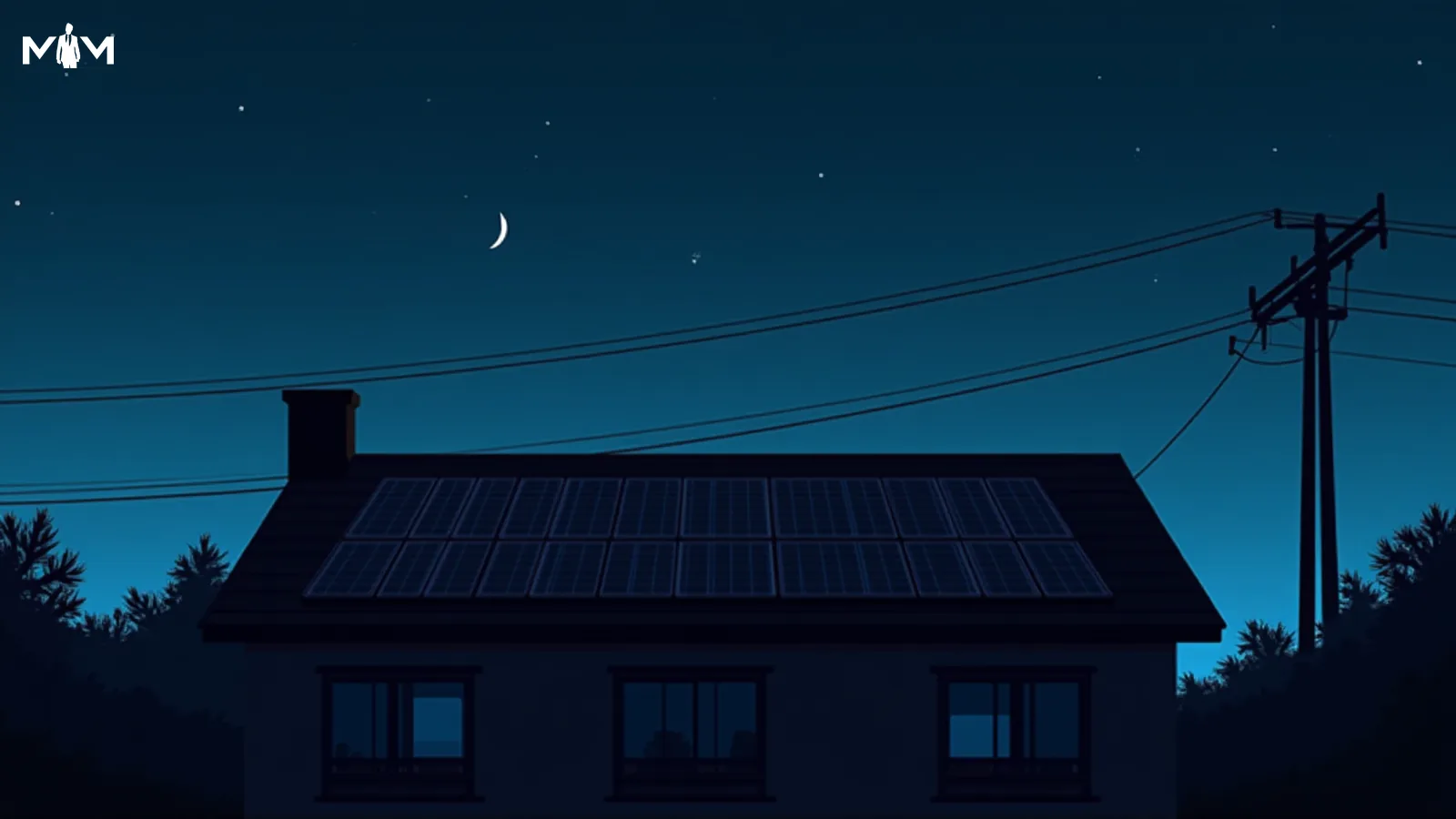
People are strapping solar panels to their roofs not because they care about carbon credits. They care about not having their power cut off by a cyberattack on infrastructure they don't control. That's a different motivation entirely. It's not idealism. It's threat modeling at the household level. People looked at the grid, ran the math on how many single points of failure sit between them and the lights staying on, and decided to opt out of that dependency.
We've watched founders do the exact same thing with software for twenty years, mostly in reverse. They build on top of platforms that look permanent, scale on top of tools that look free, and then wake up one morning to a terms-of-service change that restructures their entire cost basis. The grid they built on rewired itself, and nobody sent a memo.
Platforms Slow Things Down When It's Good for Them
Here's the part that should make you uncomfortable. Uber has spent real money lobbying to slow down the adoption of autonomous vehicles in markets where those vehicles would compete with Uber's own fleet strategy. The stated reason is preventing monopolies. The actual mechanism is protecting Uber's current position long enough to win on its own terms. This is what mature platforms do. They stop accelerating your category and start managing how fast the ground shifts under you. Every marketplace, every app store, every cloud provider is doing some version of this right now. Calling it "fighting monopolies" is a nice touch.
If your business depends on one platform for discovery, payment, distribution, or data, you are not a business. You are a feature of someone else's business. That's not a metaphor. It's a legal and operational description of your situation.
Isolation Is Not the Problem. Dependency Is.
There's a piece floating around that reframes American loneliness as something closer to an immune response than an epidemic. The argument is that pulling away, going inward, building smaller circles is not pathology. It is the organism trying to protect itself from something that stopped being safe. We've seen that exact pattern in the founders we work with. The ones who quietly stopped going to industry conferences. Who dropped the mastermind groups. Who got tired of the noise and started doing the work in rooms of three people who actually know what they're doing. We used to think that was a red flag. Now we think it's discernment. There is a version of isolation that is decay. There is another version that is tightening the circle around what actually matters. The second one produces better products.
The Founders Who Last Read Their Own History
The pattern across every long-game builder is the same thing in different costumes: obsessive study of people who built something real, combined with a refusal to outsource their core judgment to whoever happens to be loudest right now. Not trend-chasing. Not platform-hopping. A point of view that compounds over time because it was built, not downloaded. The founders who outlast the platform shifts are the ones who know what they're actually selling, who they're actually selling it to, and why neither of those things requires anyone's permission to be true.
Your Codebase Is an Asset, Not a Liability
There is a small, interesting thing happening in dev culture right now: tools that render your git commit history as generative visual art, locally, nothing leaving your machine. It sounds like a toy. It's also a symptom of something real. Developers are starting to treat their own work as something with intrinsic value, not just as output on someone else's roadmap. The commit history is a record. The patterns in it tell you something. The fact that someone made it beautiful without sending it anywhere is, quietly, a political act. Your data stays yours. Your history stays yours. That orientation matters.
We build systems for founders who are trying to own their own infrastructure, their own data, their own customer relationships. Not because they're paranoid, but because they've lived long enough to watch what happens when you don't. The solar panel people aren't wrong. The founders running on one cloud, one payment processor, one marketplace, one social platform are in the same position as a house that only has one way in. Fine until it isn't.
What You Can Actually Do
Audit your dependencies this week. Not your tools. Your single points of failure. What is the one platform, one integration, one data source that, if it changed its terms or went down, would take your business with it? That's not a rhetorical question. Write it down. Then ask whether the cost of reducing that dependency is greater than the cost of absorbing the hit when it eventually comes. It always eventually comes.
Build your own data layer before you need it. Own your email list the way you own your customer records, because you should own those too. Know exactly what your code does and where it lives. Not because you're paranoid, but because that's what a real business looks like versus a feature someone else is monetizing.
The grid is changing. The platforms are lobbying. The culture is pulling inward. The founders who will be standing in five years are the ones who read that as information and built accordingly, not the ones who assumed the infrastructure they inherited would stay friendly forever.
Dependency is not a feature. It's a slow-moving risk you've decided not to price.