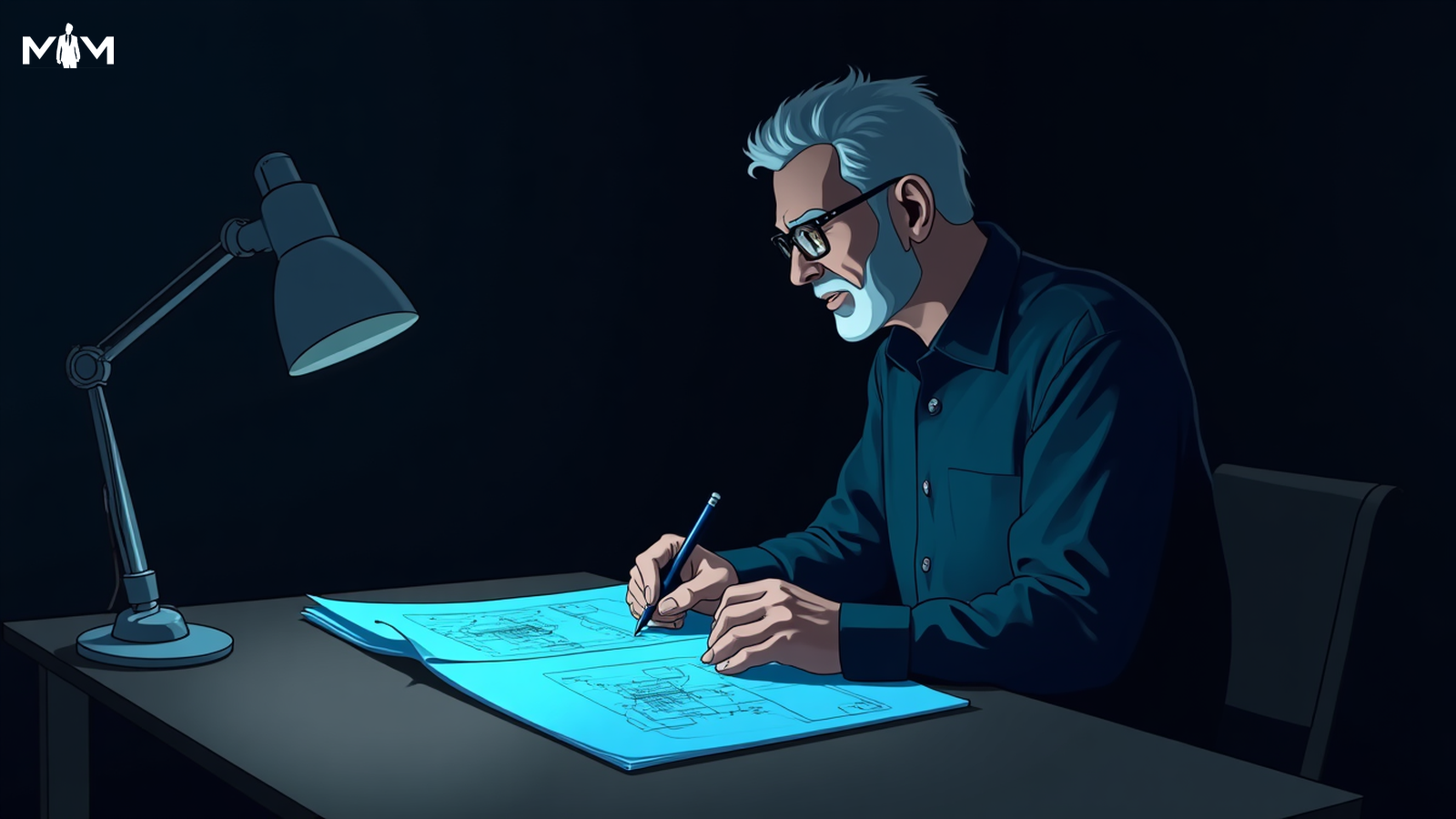
Ford is rehiring retired engineers because the AI systems meant to replace their institutional knowledge turned out to be expensive, confident, and wrong. The company is calling them "gray beards," which is a term of respect in engineering circles, even if it took a multimillion-dollar AI failure to remember that.
I am not surprised. Not even a little.
Here is what happened, stripped of the spin: Ford decided experienced engineers were expensive, AI was cheaper, and the math seemed to work. So they let people retire, bought some tools, and assumed the tools would absorb the gap. The tools did not absorb the gap. Now they are calling the retirees and almost certainly paying them consultant rates that dwarf what the salary line used to cost. The AI bill does not go away either. So they are paying twice, plus the cost of whatever broke in the middle.
This is not a Ford problem. This is a pattern I have watched repeat itself across thirty years of startup and enterprise culture, just with different characters wearing the costume. In the nineties it was outsourcing. In the two-thousands it was offshoring. In the twenty-tens it was no-code platforms that were going to eliminate developers. Each wave promised the same thing: cut the expensive humans, automate the knowledge, bank the margin. Each wave ran into the same wall. Knowledge is not a document. It is not a prompt. It is not a model weight trained on a corpus of text that someone else wrote about what people like your retired engineers used to know.
Real engineering judgment, the kind Ford needed, is made of scar tissue. It is the memory of the part that failed at minus twenty degrees because someone made a tolerance call based on a CAD file instead of going to the plant floor. It is knowing which supplier's quality control numbers are fiction and which are real. It is the meeting where someone proposed the elegant solution and the gray beard in the room said "we tried that in 1987 and here is what happens." You cannot fine-tune your way to that. You cannot RAG your way to that. The model does not know what it does not know, and the thing it does not know is exactly the thing that kills you.
Now apply this directly to software. We are doing the same thing Ford did, just faster and with more venture capital cheering us on. Teams are cutting senior developers because junior developers with AI coding tools can produce similar-looking output at a fraction of the cost. The output looks the same until it does not. Until the edge case hits. Until the system is under load and someone has to read the stack trace and actually understand what the runtime is telling them. Until the security audit comes back and someone has to make judgment calls about what matters and what does not. Until a client calls at eleven at night because the payment processor is throwing errors and the on-call person has never actually debugged a production system under pressure.
AI tools are genuinely useful. I use them. We use them at Middle Mann every day. They compress the distance between having an idea and having a draft. They make tedious work faster. They are excellent at the middle of a problem where the pattern is established and the variables are known. What they cannot do is own the edges. They cannot own the judgment call at two in the morning when the situation does not match any pattern in training data because the situation is new. They cannot take responsibility. They cannot be held accountable. And they absolutely cannot tell you what they are missing because they do not know.
The companies that are going to come out ahead in this cycle are not the ones that replaced the most humans. They are the ones that figured out which humans to keep and what to actually use the AI for. That is a harder optimization than it sounds, because it requires the very judgment you need experienced people to exercise in order to make the call. It is almost circular: you need wisdom to know where wisdom is irreplaceable.
Ford learned this by losing it. That is an expensive tuition. You do not have to pay it.
The gray beard in the room is not a cost center. The gray beard in the room is the canary that tells you which direction the ceiling is about to fall from. When you let them walk out the door because a tool said it could handle things, you are not cutting overhead. You are removing the warning system and then wondering why nobody saw it coming.
Hire the expensive senior person. Use the AI to make them faster. That is the play. Everything else is just a slower way to end up calling them as a consultant at three times the rate.